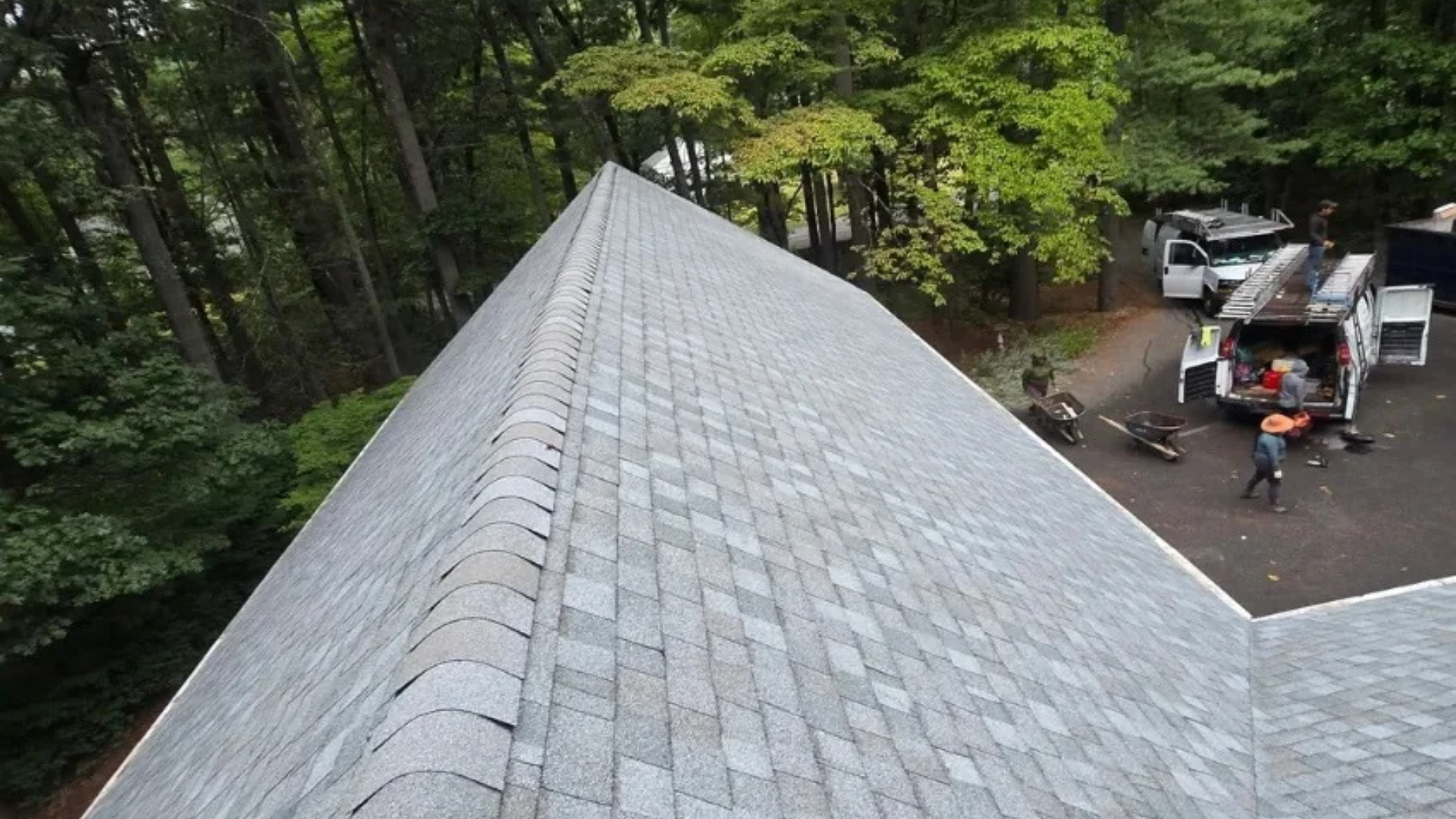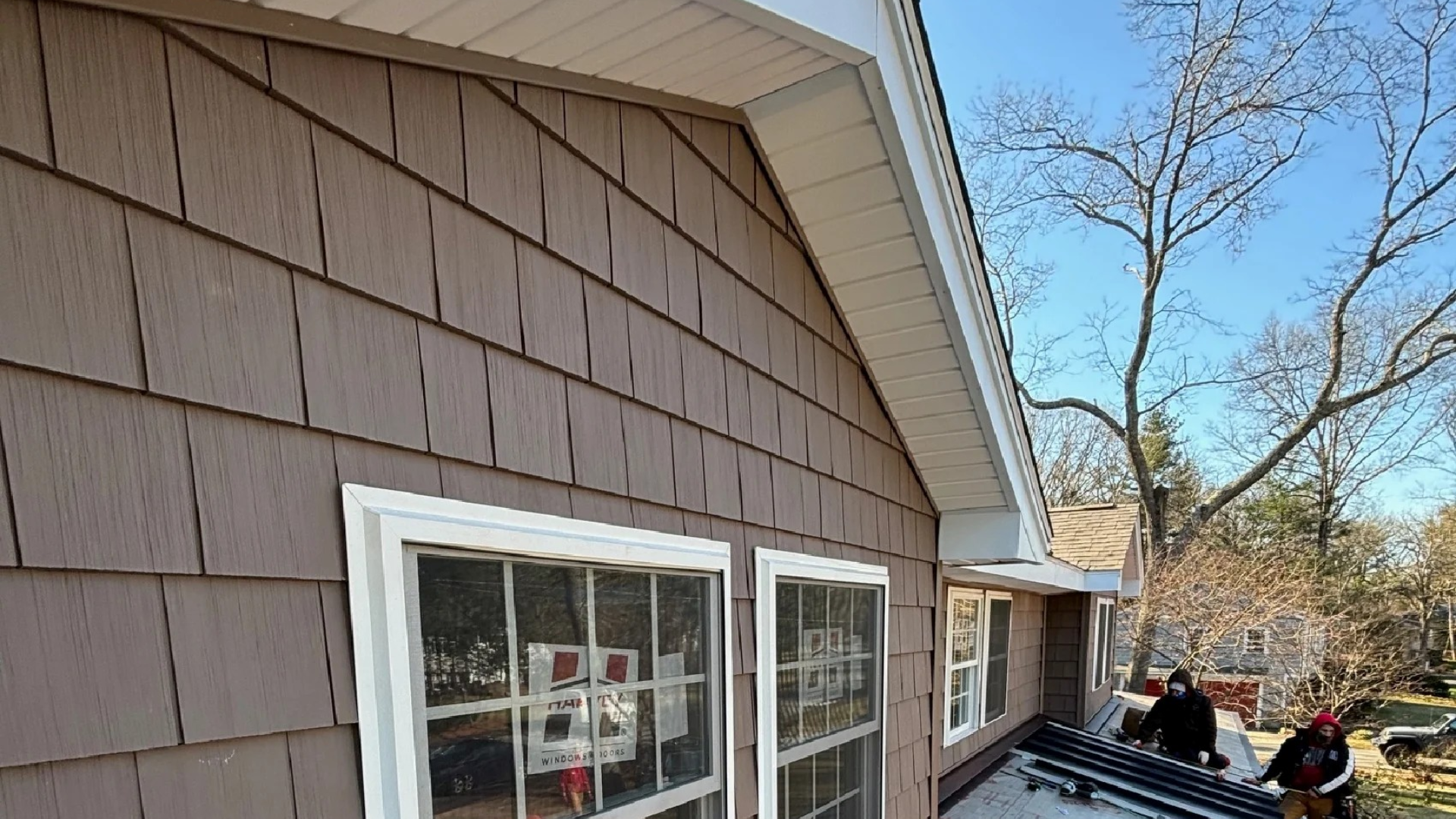

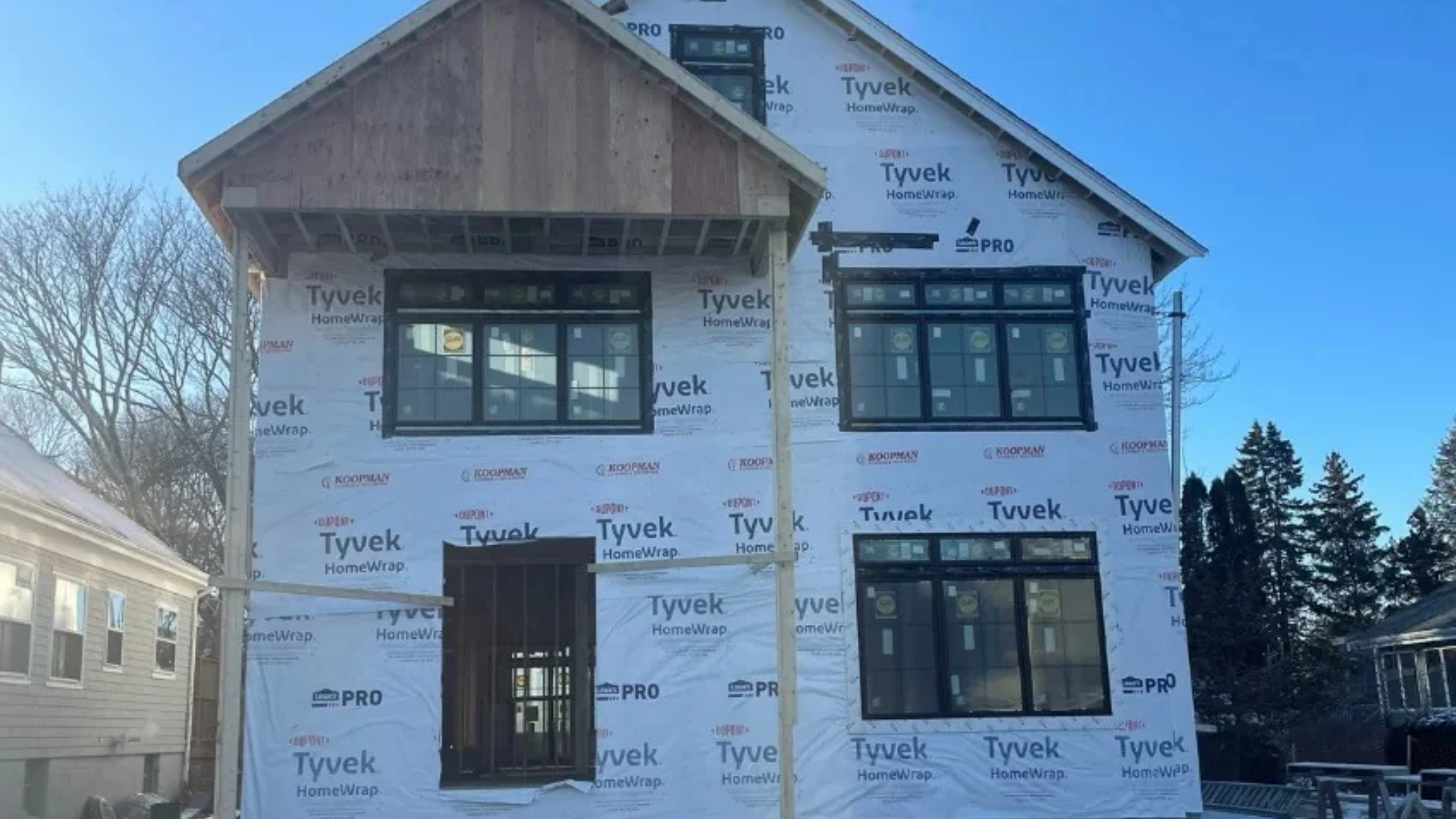
If you’re planning a roof replacement, understanding the permit to replace a roof in Massachusetts is an important first step. Most roofing projects require a building permit from your local building department, and requirements can vary depending on the town. Before starting work, it’s important to know who should obtain the permit, what regulations apply, and how working with a registered contractor can help protect your homeowner rights.
But there is a second question almost nobody thinks to ask, and it matters more than the first:
Who pulls the permit — you or your contractor?
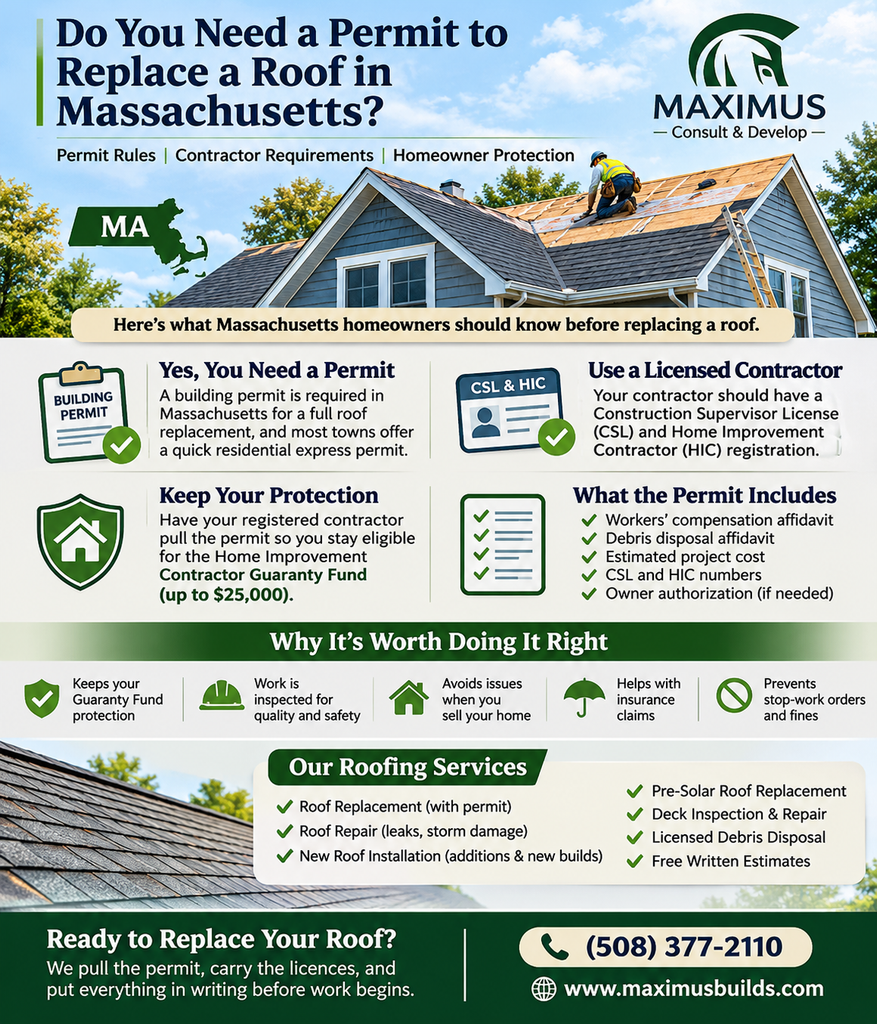
If you pull it yourself instead of having your registered contractor do it, you can lose access to the Massachusetts Home Improvement Contractor Guaranty Fund. That is up to $25,000 of protection if the work goes wrong and the contractor won’t put it right. It is a decision made in ten minutes at a counter, and it can cost you more than the roof did.
Here is what the permit actually involves, what your contractor needs to hold before they can pull it, and the rules worth knowing before you sign anything.
Why Do You Need a Permit to Replace a Roof in Massachusetts?
Under the Massachusetts State Building Code (780 CMR), a permit is required before you alter or repair a building. The code lists the work that is exempt — small detached sheds under 200 square feet, fences, driveways and sidewalks, painting and tiling, low decks that aren’t attached to the house.
Roofing does not appear anywhere on that list.
In practice, every Massachusetts town treats a full roof replacement as permitted work. Many handle it as a residential express permit, grouped with windows, doors and insulation, which means the paperwork is usually straightforward and the turnaround is fast.
Where it gets less clear-cut is small repairs. Patching a few shingles after a storm may fall under “ordinary repairs.” A partial tear-off, anything structural, or work that touches the roof deck generally does not. That line is drawn by your local building official, not by your contractor — so if there is any doubt, a two-minute phone call to the building department settles it.
Your contractor needs two separate credentials
These sound like the same thing. They are not, and the difference matters.
Construction Supervisor License (CSL)
A state licence to supervise the construction work itself. For one- and two-family homes of any size, a licensed CSL holder must oversee the job. There is even a specific restriction type for roofing, which appears on permit forms as RC — Roof Covering.
Home Improvement Contractor (HIC) registration
A separate registration required of anyone who solicits, bids on, or performs work on an existing, owner-occupied home of one to four units. HIC does not cover new construction, buildings with more than four units, or vacation and investment properties.
A legitimate roofing contractor working on your home should hold both. The permit application asks for both numbers and their expiry dates — which is precisely why an unregistered contractor cannot pull your permit, and may ask you to do it instead.
What the permit application requires
- Workers’ compensation affidavit. Without it, the permit is denied outright.
- Debris disposal affidavit. Tear-off waste has to go to a licensed solid waste facility.
- Estimated cost of labour and materials, including related work such as demolition.
- CSL and HIC numbers with expiry dates.
- Owner authorisation, if your contractor is applying on your behalf.
The contract rules that protect you
Massachusetts home improvement law sets out some firm rules. Knowing them puts you on solid ground before you sign.
- Home improvement contracts over $1,000 must be in writing.
- Your deposit cannot exceed one third of the contract price, unless the job requires special-order materials.
- Contractors cannot lend you money, and cannot arrange financing secured against your home.
- The contract should set out the cost breakdown, the scope, the schedule, and when payments fall due.
- Jobs under $500 are exempt from HIC registration — that is a minor repair, not a replacement.
The Guaranty Fund rule, stated plainly
The Home Improvement Contractor Guaranty Fund can pay up to $25,000 in actual losses if you win an arbitration or court award and the contractor fails to pay it.
You are generally not eligible if:
- you pulled the building permit yourself, or
- you hired a contractor who was not HIC registered.
This is why “I’ll pull the permit, it saves a bit” is usually a poor trade. And it is why a contractor who asks you to pull the permit is telling you something important about themselves — often that they cannot, because they are not registered to.
If a dispute does arise, claims under $7,000 are suited to small claims court, and you should send a 30-day demand letter first.
Why doing it properly is worth it
You keep your Guaranty Fund protection. Up to $25,000 if the job goes wrong.
An inspector checks the work. A second set of eyes on flashing, underlayment and ventilation — the parts you cannot assess from the ground and will not see again for twenty years.
Your house sale doesn’t stall. Unpermitted roof work surfaces during conveyancing and buyer inspections. Sorting it out retroactively is slower and more expensive than permitting it upfront.
Your insurance claim stands up. Insurers can push back on storm and leak claims where the work was never permitted or inspected.
No stop-work order. Unpermitted work discovered mid-job halts everything and can bring fines.
Who this applies to
This is for you if you are:
- A Massachusetts homeowner planning a full roof replacement and working out what is required before you start collecting quotes.
- Someone whose contractor has asked them to pull the permit themselves — read the Guaranty Fund section again before you agree.
- The owner of an older home in MetroWest or Worcester County, where the deck and flashing often need attention beyond the shingles and an inspection genuinely earns its keep.
- A buyer or seller who has discovered unpermitted roof work during a sale.
- A landlord of a one- to four-unit owner-occupied property, which falls inside HIC coverage.
Different rules apply to new construction, buildings over four units, and repairs under $500.
What we provide
At Maximus Consult & Develop in Milford, MA, the permit is part of the job — not something you are left to chase.
- We pull the permit, so your Guaranty Fund eligibility stays intact.
- Licensed and registered, with current CSL and HIC credentials and the numbers on the application.
- Full roof replacement — tear-off, deck inspection and repair, underlayment, ice barrier, flashing, ventilation and new covering.
- Roof repair for leaks, storm damage and failed flashing.
- New roof installation on additions and new builds.
- Pre-solar roof replacement, so you are not fitting panels over a roof with five years left in it.
- Licensed debris disposal, affidavit included.
- Free written estimates, with the cost breakdown the contract rules call for.
Learn more about our roofing services in Massachusetts, including roof replacements, roof repairs, and new roof installations.
Why Choose Us for Roof Replacement in Massachusetts?
We are a Milford-based builder working across MetroWest and Worcester County — Framingham, Natick, Hopkinton, Franklin, Medway, Holliston, Mendon and the towns around them. That matters on permits, because requirements and turnaround times vary from one building department to the next, and we already know them.
We hold current CSL and HIC credentials. We pull the permit in our name. You get a written contract with a cost breakdown, a schedule, and a payment plan that respects the one-third deposit limit. No pressure for money upfront, no financing arrangements, and no asking you to sign for the permit.
You should check any contractor before you hire them, including us. Massachusetts publishes HIC registration status and complaint history on the MA Contractor Hub — it takes a minute.
Frequently asked questions
Do I need a permit to replace just part of my roof? Usually yes for a partial tear-off or anything structural. Very small repairs may count as ordinary repairs, but your local building official draws that line, not your contractor. Call the building department if you are unsure.
How much does a roofing permit cost in Massachusetts? It varies by town and is normally based on the estimated project cost. It is a small fraction of what the roof costs. Your building department can quote it once you have a project value.
How long does it take to get one? Many towns run roofing through a residential express permit, often turned around in a day or two. Structural or larger jobs take longer.
Can I pull the permit myself? You can — Massachusetts allows a homeowner exemption. But doing so generally forfeits your Guaranty Fund eligibility and access to the HIC arbitration programme. For most homeowners that is a bad trade.
What if my contractor isn’t HIC registered? Then the Guaranty Fund does not cover the work at all, and the arbitration route is closed to you. Verify registration before you sign anything.
What happens if I skip the permit entirely? You risk a stop-work order and fines, complications when you sell, and difficulty with insurance claims later. Retroactive permitting is possible, but slower and more expensive.
Does a new roof get inspected? Yes — permitted roof work is subject to inspection by the local building department. Your contractor should schedule it.
Planning a roof replacement in Massachusetts?
We pull the permit, we carry the licences, and we put everything in writing before any work starts.
Call (508) 377-2110 for a free, no-pressure estimate — or request one online and we will come out and look at the roof properly.